
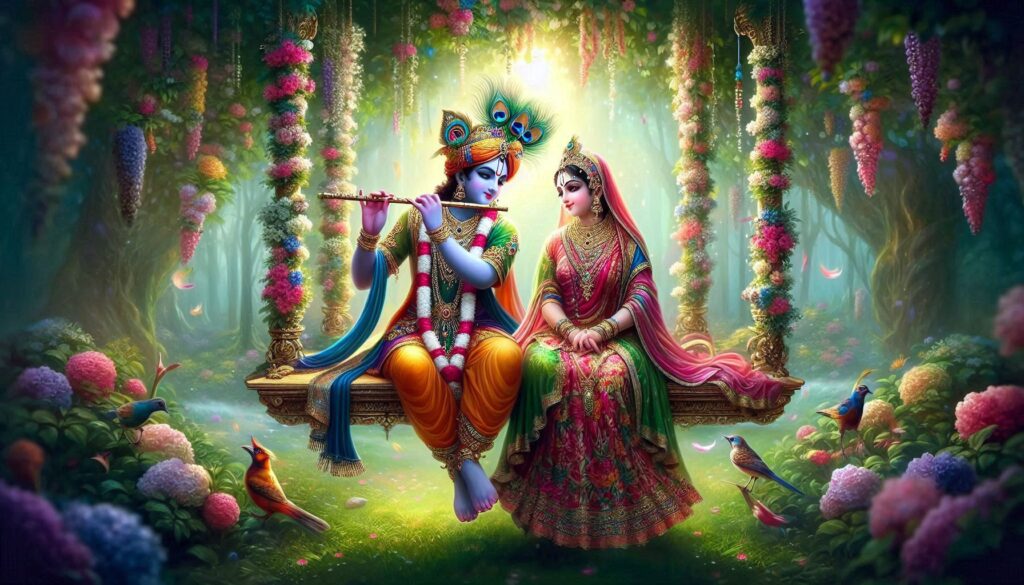
Radha Ashtami, also known as Radha Janmashtami, celebrates the birth of Goddess Radha, the beloved and devoted companion of Lord Krishna. Her love and devotion hold immense importance in Hinduism, where people revere her as the symbol of pure devotion, love, and surrender. Radha Ashtami takes place on the Ashtami Tithi (eighth day) of the Bhadrapada month and is widely celebrated across North India.
Importance of the Festival:
Radha Ashtami highlights the birth of Goddess Radha and her contribution to Krishna’s devotion. Devotees view Radha and Krishna’s love story as a central part of Hinduism. They believe that worshiping Krishna is incomplete without Radha, as their love represents eternal devotion. On this day, devotees actively seek Radha’s grace and blessings, striving to follow her path of devotion and love.
Date and Time:
Radha Ashtami is observed on the Ashtami Tithi of the Bhadrapada month, as per the Hindu lunar calendar, usually falling in August or September. This year, devotees will celebrate Radha Ashtami on 31th August 2025. Although it occurs close to Krishna Janmashtami, Radha Ashtami is celebrated separately, focusing entirely on Goddess Radha.
Radha Ashtami Katha
According to the scriptures, once Sage Narada approached Lord Shiva and humbly asked,
“O Lord! You are all-knowing. Please tell me, who is Goddess Radha? Is She Mahalakshmi, Saraswati, or Vaishnavi Prakriti? Is She the daughter of the Vedas, the daughter of the gods, or a sage’s daughter?”
Smiling, Lord Shiva replied,
“O Narada! Even countless Mahalakshmis are insignificant compared to the beauty of Radha’s lotus feet. Her divine charm and sweetness are beyond description. Even Lord Krishna, who enchants the entire universe, becomes enchanted by Radha’s beauty and love. No one in all the three worlds can fully describe Her qualities and grace.”
Hearing this, Narada asked again,
“O Lord, please tell me about Radha’s divine birth and the greatness of the Radha Ashtami Vrat.”
Lord Shiva then explained,
“In Vraja, there was King Vrishbhanu, a noble, learned, and devoted soul, who was a great worshipper of Lord Krishna. His wife was Queen Kirti, radiant and virtuous, equal to Mahalakshmi Herself. From her womb, on the eighth day (Ashtami) of the bright half of the Bhadrapada month, at noon, in the sacred land of Vraja, appeared the Queen of Vrindavan — Shri Radharani. This day is celebrated as Radha Ashtami.”
How to Observe Radha Ashtami Vrat Vidhi:
On Radha Ashtami, devotees fast and worship to seek the blessings of Goddess Radha. They perform rituals with deep devotion, celebrating her divine birth. Here’s how to observe the Radha Ashtami Vrat Vidhi:
1. Preparation for the Vrat:
- Purification: Start the day with a bath and wear clean clothes. Purify both body and mind to prepare for worship.
- Sankalp (Vow): After your bath, make a vow to observe the fast by praying to Lord Krishna and Goddess Radha. Promise to remain either nirahar (without food) or consume only fruits throughout the day.
2. Set Up the Worship Space:
- Select a clean spot in your home, and place the idols or pictures of Radha and Krishna there.
- Decorate the space with flowers and rangoli (colorful artwork).
- Keep items such as panchamrit (a mixture of milk, yogurt, ghee, honey, and sugar), incense, lamps, sandalwood, fruits, sweets, and holy water ready for the ritual.
3. Performing the Worship:
- Kalash Sthapana (Sacred Pot): Set up a kalash filled with water, adding rice, a coin, and a betel nut, and cover it with mango leaves.
- Achaman and Prayer: Begin the ritual by offering prayers to Lord Ganesha and purifying the process with water. Ask for his blessings to avoid any errors during worship.
- Invoke Goddess Radha: Meditate on Radha, invite her into the ritual, and offer her a seat.
- Panchamrit Bath: Bathe Radha’s idol or image with panchamrit, then cleanse it with pure water and dress her in new clothes.
- Tilak Ceremony: Apply a paste of sandalwood and turmeric on Radha’s forehead.
- Offering Lamps and Incense: Light the lamps and incense, offering them to Radha while performing the aarti. Offer flowers and sweets as well.
- Chanting Mantras: Recite mantras dedicated to Goddess Radha, especially “Om Radhayai Namah.”
- Singing Aarti: Sing Radha Aarti with devotion, praising her divine virtues. After the aarti, distribute prasad to family members.
4. Fasting:
- Devotees fast throughout the day. You may either stay nirahar (without food) or consume phalahar (fruits, milk, and water).
- Avoid foods like onions, garlic, and tamasic items. Instead, consume sattvic (pure) foods if necessary.
5. Devotional Singing:
- Spend the day singing bhajans and kirtans dedicated to Radha and Krishna. Engage in listening to Radha-Krishna’s divine love stories.
- In many communities, devotees arrange performances of Radha-Krishna’s leela (divine pastimes).
6. Listening to Scriptures:
- Devotees believe it is auspicious to read and listen to Radha-Krishna stories on this day. These stories deepen their devotion and faith in the divine couple.
7. Breaking the Fast:
- After sunset or the following day, devotees break the fast. They consume sattvic meals, ensuring their offerings to the divine are pure.
- Seek forgiveness from Lord Krishna and Radha for any errors made during the vrat.
8. Charity and Good Deeds:
- Charity is an integral part of Radha Ashtami. Devotees donate food, clothes, and money to the needy people.
- Offering food to animals is also considered virtuous on this auspicious day.
Social and Cultural Significance:
Radha Ashtami fosters not only religious devotion but also social unity. Communities organize various cultural events, including jhankis (tableaux), devotional singing, and dances that depict the divine love of Radha and Krishna.
Spiritual Blessings:
Devotees believe that worshiping Goddess Radha on Radha Ashtami brings blessings of love, peace, and devotion. Through fasting and prayer, they seek her grace, which leads to happiness, prosperity, and spiritual growth.
Radha Ashtami serves as an important occasion to honor and worship Goddess Radha. This day symbolizes love, devotion, and surrender, offering devotees the opportunity to connect with the divine and seek spiritual fulfillment.