
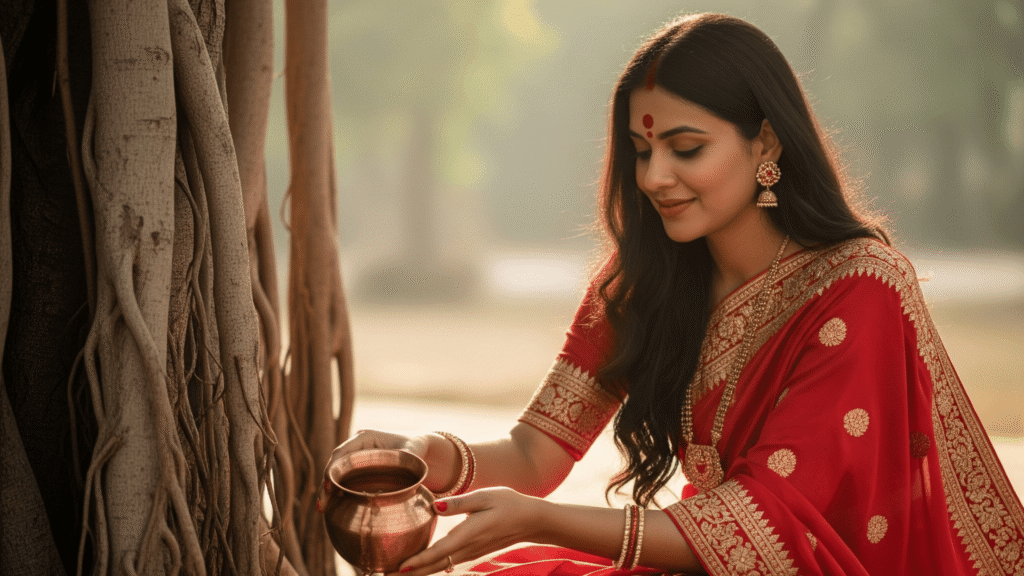
In Indian culture, festivals and fasts (vrats) hold a special place. They not only strengthen religious beliefs but also bring discipline, self-control, and spiritual purity into life. One such significant fast is Rambha Teej Vrat, observed especially by women for the long life, well-being, and harmonious married life of their husbands. This vrat is observed on the Tritiya Tithi of the Shukla Paksha in the month of Jyeshtha. It is named “Rambha” after the celestial nymph (apsara) Rambha, who was the first to observe this fast.
What is Rambha Teej Vrat?
Rambha Teej is a traditional fast observed by women, especially married ones, to pray for the longevity, prosperity, and love in their married life. It holds particular significance for newly married women. On this day, Goddess Gauri (Parvati) and the sacred Banyan tree (Vat Vriksha) are worshipped with devotion.
History and Mythological Story of Rambha Teej Vrat
Long ago, in the heavenly realm, there lived a stunningly beautiful apsara named Rambha, known for her unmatched beauty and dancing skills. One day, she encountered a sage (rishi) on Earth who was extremely radiant, calm, and deeply immersed in meditation. Rambha fell in love with him. Eventually, they got married and began living a humble household life.
Though they were deeply in love, the sage led a life full of intense penance and spiritual discipline. Rambha feared that her human husband, unlike her (an immortal apsara), might suffer an untimely death due to his rigorous ascetic life.
She shared her concern with other celestial beings and deities. Then Goddess Gauri (Parvati) advised her to observe a special fast on the Tritiya of Shukla Paksha in Jyeshtha month.
Goddess Parvati said:
“O Rambha! Just as I performed penance and fasts to attain Lord Shiva as my husband, if you observe this fast with devotion and discipline, your husband will be blessed with a long life.”
Rambha obeyed the goddess and observed the fast with utmost sincerity. She remained without food and water for the entire day, worshipped the Banyan tree and Goddess Gauri, and prayed for her husband’s long life and prosperity.
Pleased with her devotion, Goddess Gauri appeared before her and granted her a boon:
“O Rambha! I am pleased with your dedication. I bless your husband with a long, healthy, and joyful life. Any woman who observes this fast with sincerity will be blessed with marital bliss and unbroken good fortune (Akhand Saubhagya).”
After this, Rambha’s husband lived a long and happy life, and their marriage remained full of love and harmony. Since then, this fast became known as Rambha Teej Vrat, and it is observed by women for their husbands' well-being and marital bliss.
Why is Rambha Teej Vrat Observed?
- For the long life of the husband
- To maintain love and harmony in marital life
- For eternal good fortune (Akhand Saubhagya)
- For prosperity and happiness in the family
- To develop spiritual strength and discipline
When is Rambha Teej Vrat Observed?
This fast is observed on the Tritiya (3rd day) of Shukla Paksha in the month of Jyeshtha as per the Hindu calendar. The Gregorian date varies each year, so one should refer to a Hindu Panchang (calendar) annually for the exact date.
Puja Vidhi (Ritual Process) of Rambha Teej Vrat
1. Vow of Fasting (Sankalp):
After bathing at Brahma Muhurta (early morning), wear clean clothes and take a vow:
“I (your name), today observe the Rambha Teej Vrat with devotion for my husband’s long life, good fortune, and a blissful married life. O Mother Parvati, bless me with the strength to complete this fast.”
2. Fasting Rules:
- The fast can be Nirjala (without water) or with only fruits (Phalahar).
- Wake up before sunrise, bathe, and take the vow.
- Remain pure in thought, speech, and action throughout the day.
3. Required Puja Materials:
- Turmeric, vermilion (sindoor), raw rice
- Betel nuts, betel leaves, coconut
- Clay or metal idol of Goddess Gauri
- A small branch of the banyan tree (or worship under a real tree)
- Red cloth, makeup items (Shringar), sweets, fruits, diya (lamp)
4. Banyan Tree Worship:
- If there's a banyan tree nearby, perform puja under it. Otherwise, bring a small branch and install it at home.
- Pour water at its base, apply tilak with roli and rice, and tie sacred thread (mouli) around it.
- Do seven circumambulations (parikrama) and listen to the vrat katha.
5. Listening to the Vrat Katha:
- After the puja, it is essential to listen to the Rambha Teej Vrat Katha. This completes the ritual and brings divine blessings.
Benefits of Observing Rambha Teej Vrat
- Long life for husband: The main objective is to gain blessings for the husband’s longevity.
- Harmonious married life: Strengthens love and understanding between couples.
- Unbroken good fortune: Women are blessed with eternal marital bliss and prosperity.
- Blessings for children: Women desiring children benefit from this vrat.
- Spiritual merit: The fast purifies the soul and brings divine blessings.
What to Do on Rambha Teej Vrat Day
- Wake up early and take a holy bath.
- Wear red or yellow clean clothes.
- Adorn yourself with Solah Shringar (sixteen adornments).
- Worship Goddess Gauri and the Banyan tree.
- Listen to or recite the vrat katha.
- Keep the fast throughout the day, break it only after the evening rituals.
- Donate clothes, sweets, or beauty items to needy women.
What Not to Do on This Day
- Do not quarrel, use harsh words, or lie.
- Avoid cutting nails or hair.
- Do not eat garlic, onion, or other tamasic food.
- Don’t mock or belittle the vrat.
- Do not perform the puja if you are impure (due to menstruation, etc.).
Rambha Teej Vrat is not merely a religious ritual but a reflection of a woman’s deep love, dedication, and spiritual commitment to her husband. It represents the beauty of Indian womanhood—steeped in tradition, devotion, and inner strength. By observing this vrat with full faith and discipline, Goddess Parvati blesses the devotee with peace, prosperity, and marital happiness.