
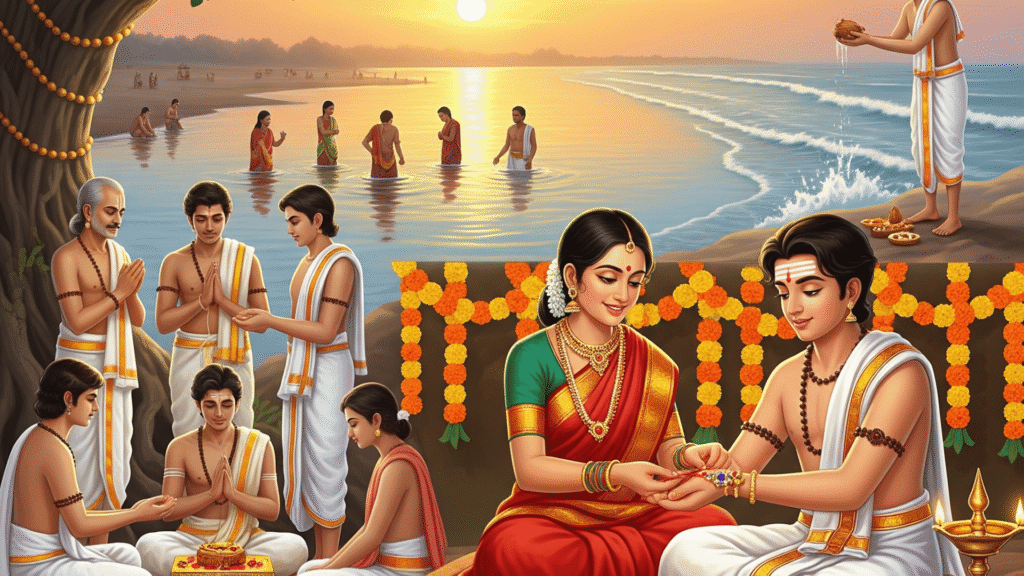
Shravan Purnima is the final date (tithi) of the Hindu lunar month of Shravan, which falls on the full moon day. This date holds significant religious, cultural, and spiritual importance. In different parts of India, it is celebrated in various forms — in some regions as Raksha Bandhan, and in others as Upakarma (the sacred thread or Yajnopavita ceremony). It is known by different names across regions: Narali Purnima in South India, Raksha Bandhan in North India, Kajari Purnima in Central India, and Shravani in the Himalayan regions.
Shravan Purnima 2025 (Sawan Purnima):
Date – It will be primarily celebrated on 9th August 2025 (Saturday).
Purnima Tithi – Begins on 8th August 2025 at 2:12 PM and ends on 9th August 2025 at 1:24 PM.
Main Festivals on this Day –
- Raksha Bandhan (Rakhi Purnima)
- Upakarma / Avani Avittam (Sacred Thread Changing Ritual)
- Hayagriva Jayanti
- Nariyal (Coconut) Purnima, Kajari Purnima, Pavitropana, Jhulan Purnima (Regional observances)
Significance –
It marks the last day of the month of Shravan, dedicated to special worship of Lord Shiva and Lord Vishnu, accompanied by fasting, charity, and offering water (Arghya) to the Moon.
Auspicious Time for Tying Rakhi – From 5:21 AM to 1:24 PM on 9th August.
Special Yogas –
This day will also witness the presence of Sarvartha Siddhi Yoga and Abhijit Muhurat, enhancing the importance of performing auspicious activities.
Why is Shravan Purnima celebrated?
The month of Shravan is considered dear to Lord Shiva. The full moon day of this month is associated with many significant religious events, such as:
- Completion of Shiva and Parvati’s divine marriage
- Completion of Vedic studies and the act of listening (shravan)
- The sacred thread (Yajnopavita) ceremony by sages
- Celebration of Raksha Bandhan, symbolizing the love and protection between siblings
On this day, rituals like yajna (sacred fire), charity, bathing, fasting, chanting, and special puja are considered highly auspicious.
Religious Significance of Shravan Purnima
1. Raksha Bandhan:
On this day, sisters tie Rakhi (sacred thread) on their brothers’ wrists and pray for their protection and long life. In return, brothers vow to protect their sisters. This tradition originates from the story of Indra’s wife, Shachi (Indrani), who tied a raksha-sutra on Indra for his protection in battle.
2. Yajnopavita Ceremony (Upakarma):
For the Brahmin, Kshatriya, and Vaishya classes, this day is observed to don the sacred thread and begin Vedic studies. Known as Upakarma or Shravani, students commence reciting the Vedas before their Gurus.
3. Narali Purnima:
Those involved in sea-related occupations, especially the Koli community in Maharashtra and South India, offer coconuts to the sea on this day. It is a way of worshipping the Sea God to seek blessings and protection.
4. Kajari Purnima:
In Central India, women observe fasts on this day for the well-being of their children and family prosperity. They sing Kajari songs under a neem tree branch and listen to the Kajari Vrat Katha.
What Should Be Done on Shravan Purnima?
1. Holy Bath and Fasting
- Wake up early at Brahma Muhurta and take a bath in a holy river or with pure water.
- Observe a fast and eat sattvic (pure vegetarian) food.
- Engage in prayers to Lord Shiva, Lord Vishnu, and sages throughout the day.
2. Puja Rituals
- Clean your puja area and sprinkle it with cow dung water or Ganga water.
- Install idols or images of Lord Shiva, Vishnu, Ganesha, and sages.
- Offer flowers, fruits, incense, lamps, and naivedya (offering food).
- Prepare a raksha-sutra (sacred thread), offer it to the deities, and then tie it on brothers.
3. Raksha Bandhan Tradition
- Sisters perform aarti, apply tilak, and tie rakhi on their brothers’ wrists.
- Offer sweets and pray for their long life and happiness.
- Brothers give gifts and take a vow to protect their sisters.
4. Yajnopavita and Brahmin Worship
- Brahmins wear new sacred threads (janeu).
- Perform the Yajnopavita Samskar.
- Offer charity and dakshina to Brahmins and seek their blessings.
5. Coconut Offering to the Sea
- People associated with sea-based livelihoods decorate and offer coconuts to the sea.
- This is a prayer ritual seeking the sea's blessings and protection for the year ahead.
Beliefs and Legends Associated with Shravan Purnima
1. Vamana Avatar Legend
On Shravan Purnima, Lord Vishnu incarnated as Vamana and asked King Bali for three paces of land, eventually sending him to the netherworld. This day commemorates this divine incarnation.
2. Shiva-Parvati Marriage Legend
It is believed that after month-long fasting and devotion, the divine marriage of Shiva and Parvati was completed on Shravan Purnima.
3. Indra and Shachi’s Protection Legend
During the Devasura war, Indrani (Shachi) tied a raksha-sutra for Lord Indra’s protection. Since then, this tradition of tying rakhi for protection has continued.
Spiritual Perspective of Shravan Purnima
- The day symbolizes self-purification, detachment, and service.
- Upakarma reminds us that life’s goal is not just materialism, but knowledge and dharma.
- Rakhi is not just a thread of protection but also promotes love, trust, and harmony in society.
Rituals Related to Shravan Purnima
| S.No. | Ritual | Purpose |
|---|---|---|
| 1 | Holy Bath and Fasting | Physical and mental purification |
| 2 | Sacred Thread Ceremony | Beginning of spiritual knowledge |
| 3 | Raksha Bandhan | Strengthening sibling relationships |
| 4 | Coconut Offering | Pleasing the Sea God |
| 5 | Worship and Donations to Brahmins | Gaining blessings and virtue |
Social Significance of Shravan Purnima
- This day fosters brotherhood, sensitivity, and affection in society.
- Different communities celebrate the festival in their own unique ways, enhancing social unity.
- Festivals like Raksha Bandhan promote women’s respect and safety in society.
Shravan Purnima is a festival of religious, social, and cultural importance. It encourages us to walk the path of self-reflection, discipline, and service. The love between siblings, reverence for gurus, and worship of deities—all come together on this sacred day. It is our duty to celebrate this occasion with faith, devotion, and community spirit.