
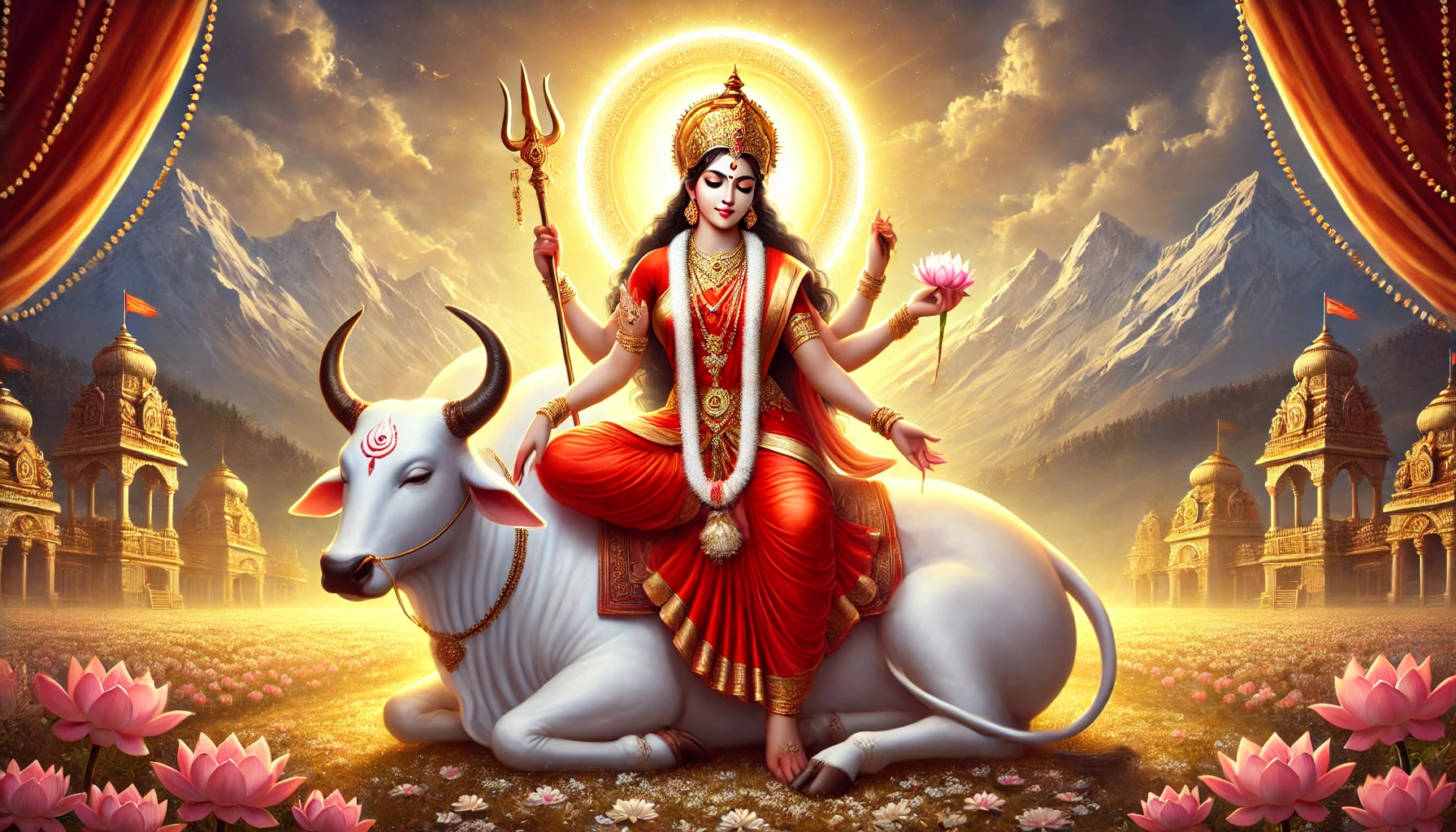
On the first day of Navratri, the worship of Maa Durga's first form, Maa Shailputri, is performed. She is called the Daughter of the Mountains as she was born to King Himalaya. Maa Shailputri symbolizes power, stability, and unwavering determination. She rides on Nandi (bull) and holds a Trishul (trident) in her right hand and a lotus flower in her left hand. Worshipping her brings mental stability and strength.
Worship Rituals of Maa Shailputri
The first day of Navratri is considered sacred and significant. On this day, Kalash Sthapana (establishment of a sacred pot) is performed, and Maa Shailputri is invoked.
1. Morning Preparation
- Wake up early in Brahma Muhurta and take a bath.
- Purify the home and puja area with Ganga water.
- Install an idol or image of Maa Durga in a sacred place.
2. Kalash Sthapana (Sacred Pot Establishment)
- Sow barley seeds in an earthen pot and place a water-filled Kalash (pot) over it.
- Place mango leaves on the Kalash and cover it with a coconut wrapped in a red cloth.
- Draw a Swastika on the Kalash and fill it with holy water, rice grains, betel nut, and a coin.
3. Worship Rituals of Maa Shailputri
- First, meditate on Maa Shailputri.
- Offer rice grains, flowers, sandalwood, vermillion, and sindoor to the Goddess.
- Light a ghee lamp and perform aarti with camphor.
- Offer white-colored food items like milk, kheer (rice pudding), or sugar to Maa Shailputri.
- Recite Durga Saptashati and chant her sacred mantras.
Story of Maa Shailputri
Maa Shailputri was born as Sati, the daughter of King Daksha. Sati self-immolated in yoga fire when her father insulted Lord Shiva. In her next birth, she was born as Shailputri (daughter of King Himalaya). She later performed severe penance and was reunited with Lord Shiva.
This story teaches us that true devotion and perseverance can overcome all difficulties.
Worshipping Maa Shailputri on the first day of Navratri is highly auspicious and beneficial. Her blessings bring positive energy, mental strength, peace, and prosperity. By performing her puja with faith and devotion, one can receive her divine grace and protection.
Jai Mata Di!
Mantras and Chanting for Maa Shailputri
Reciting the following mantras during the worship of Maa Shailputri is considered highly auspicious:
1. Dhyana Mantra (Meditation Mantra)
“Vande Vanchhita Laabhaya Chandrardha Krita Shekharam।
Vrisharudham Shuladharam Shailputrim Yashasvinim॥”
2. Beej Mantra
“Om Devi Shailputryai Namah॥”
3. Stuti Mantra (Praise Mantra)
“Ya Devi Sarvabhuteshu Maa Shailputri Rupena Sansthita।
Namastasyai Namastasyai Namastasyai Namo Namah॥”
Chanting this mantra at least 108 times brings the blessings of Maa Shailputri.
Benefits of Worshipping Maa Shailputri
Worshipping Maa Shailputri brings numerous spiritual and material benefits:
1. Enhances Willpower and Determination
- Maa Shailputri represents unwavering determination and strength. Worshipping her increases mental resilience and helps individuals achieve their goals.
2. Brings Family Happiness and Prosperity
- Those seeking harmony and prosperity in their family life should worship Maa Shailputri. Her blessings ensure love and unity within the family.
3. Cures Mental and Physical Ailments
- Her blessings help in relieving stress, anxiety, and depression. She provides healing energy and protects from diseases.
4. Blessings for Marriage and Married Life
- For unmarried girls, worshipping Maa Shailputri removes obstacles in marriage. Married women receive blessings for a happy and prosperous married life.
5. Aids in Spiritual Growth
- For those on a spiritual path, Maa Shailputri’s worship is highly beneficial. She provides the strength to progress on the path of self-realization and liberation.
Navratri Fasting and Dietary Guidelines
- Devotees who observe fast on this day should consume only fruits and light meals.
- Avoid onion, garlic, and tamasic foods.
- Use only rock salt (sendha namak) for cooking.
- Eating once a day is considered ideal during Navratri.
Significance of Kalash Sthapana in Navratri
Kalash Sthapana (establishing the sacred pot) holds great importance on the first day of Navratri. It symbolizes divine energy, and placing it in the correct auspicious time attracts peace, prosperity, and positivity to the home.