

Chapter 1 – Arjuna’s Despondency
Verse 12
Tasya, sanjanayan’, harsham’, KuruvrddhH, pitaamahH,
Sinhnaadam’, vinadhya, uchchaiH, shankham’, dadhmau, prtaapvaan’ ||12||
Literal Meaning:
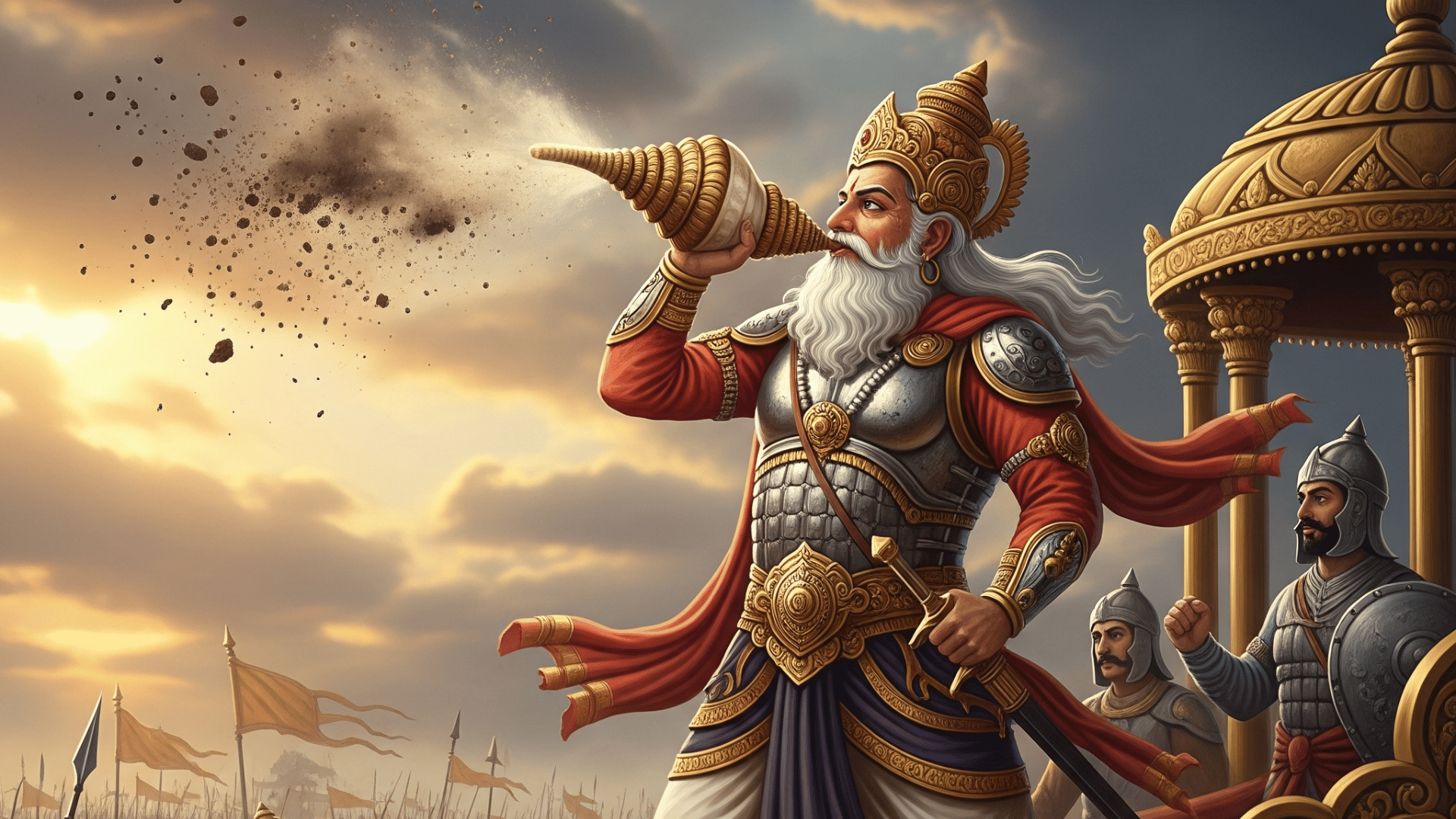
At that moment, the elderly and mighty grandsire of the Kauravas, Bhishma, to uplift Duryodhana’s enthusiasm, roared loudly like a lion and blew his conch shell with great force.
Deep Explanation:
This verse describes the moment just before the battle begins. After Duryodhana speaks to Dronacharya about the arrangement of his army, Bhishma—who is the eldest and most revered warrior on the Kaurava side—blows his conch shell loudly to energize the army and demonstrate their strength.
This conch blast was not merely a signal; it was a means to boost the morale of the soldiers, intimidate the enemy, and declare the formal commencement of war. The sound of the conch is compared to a lion’s roar—powerful and filled with confidence.
It also indicates that Bhishma is now ready for battle, and this act spreads a wave of excitement and vigor throughout the Kaurava army.
Key Points:
- The conch blast was not just a sound—it acted as a psychological weapon.
- Bhishma blowing the conch symbolized his experience and valor.
- It was done to strengthen Duryodhana’s confidence.
- This moment marks the formal initiation of the great war.