
Chapter 2 – Sankhya Yoga
Verse 66
Sanskrit Verse
nāsti buddhir-ayuktasya na chāyuktasya bhāvanā
na chābhāvayataḥ śhāntir aśhāntasya kutaḥ sukham
Simple Meaning
O Arjuna!
A person without self-control cannot have steady intellect, nor can such a person possess spiritual understanding or meditation. Without inner peace, there can be no happiness. How can an unpeaceful person ever be truly happy?
Detailed Explanation
Lack of Self-Control Disturbs the Mind
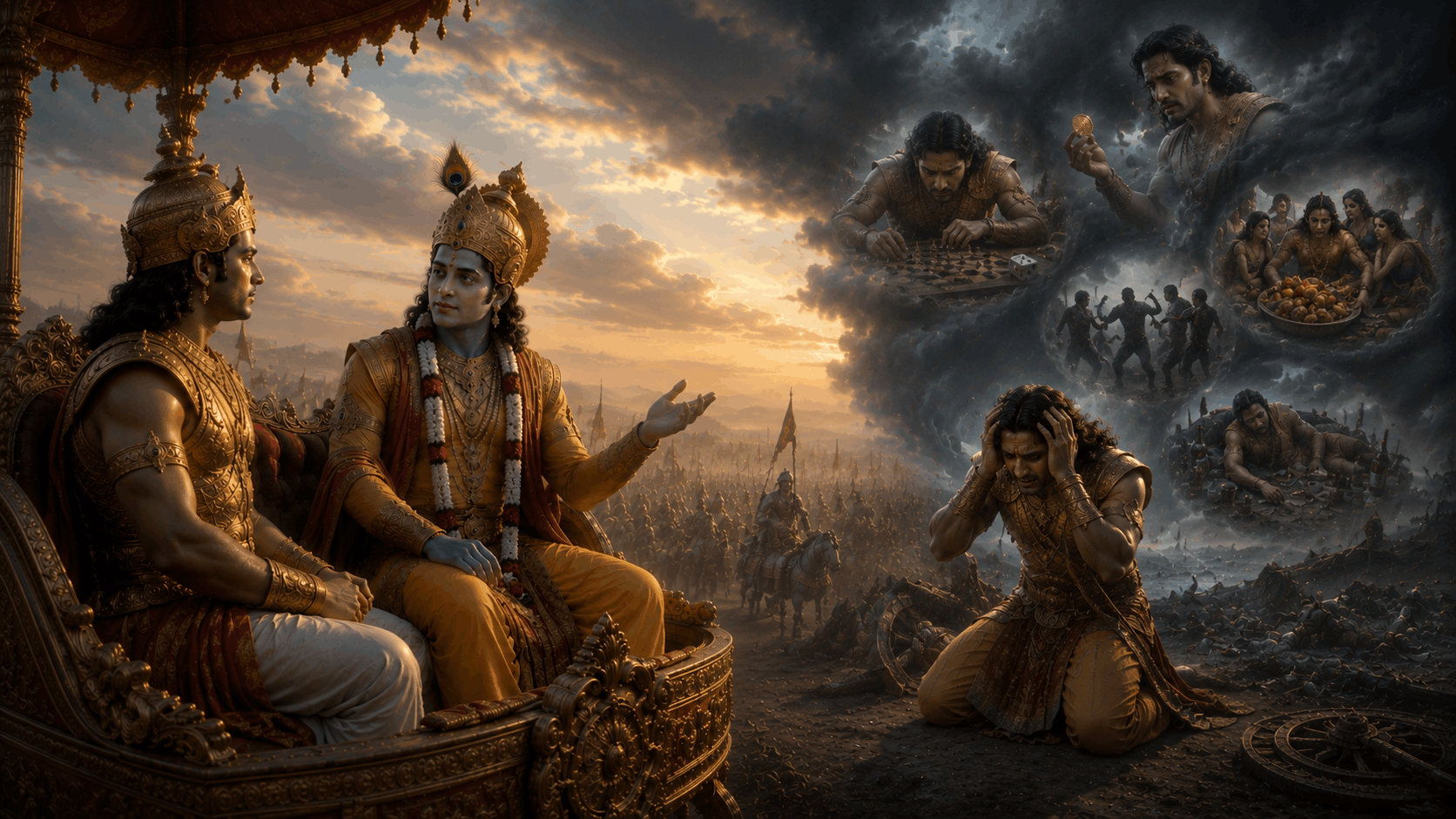
Krishna explains that a person who cannot control the mind and senses becomes mentally restless.
Such a person lacks stability in thinking and decision-making.
Without discipline, the intellect constantly wavers.
No Spiritual Focus Without Discipline
An uncontrolled mind cannot concentrate on higher thoughts or spiritual realization.
“Bhāvanā” here refers to contemplation, meditation, and spiritual awareness.
A distracted person remains absorbed in external desires and distractions.
Absence of Peace
Krishna teaches that without inner discipline, peace is impossible.
An agitated mind remains trapped in stress, anxiety, and dissatisfaction.
Even worldly success cannot provide lasting contentment to a disturbed mind.
Happiness Comes from Peace
True happiness arises only from inner peace.
If the mind is constantly restless and disturbed, real joy can never be experienced.
Therefore, peace is the foundation of a meaningful and fulfilled life.
The Importance of Mental Discipline
Krishna’s message is practical and timeless:
Control the senses
Train the mind
Develop inner peace
Only then can true happiness be attained
Key Points
- Self-control is necessary for steady intellect
- A restless mind cannot meditate or think clearly
- Inner peace is essential for happiness
- Lack of peace leads to suffering and confusion
- Discipline of mind and senses brings stability
Profound Spiritual Meaning
This verse reveals that happiness is not found in external pleasures, but in inner calmness.
Krishna teaches that self-mastery is the key to spiritual wisdom and peace.
A person who controls the mind gains clarity, serenity, and lasting happiness.
The deeper truth is: Without inner peace, no external achievement can bring true joy.
Word-by-Word Meaning
Nāsti – There is no
Buddhiḥ – Steady intellect
Ayuktasya – Of one without self-control
Na – Not
Cha – And
Ayuktasya – Of the undisciplined person
Bhāvanā – Meditation / spiritual contemplation
Na – Not
Cha – And
Abhāvayataḥ – Of one without contemplation
Śhāntiḥ – Peace
Aśhāntasya – Of the unpeaceful person
Kutaḥ – How
Sukham – Happiness
Message of the Shloka
A person without self-control cannot attain steady intellect, meditation, or peace.
And without peace, true happiness is impossible. Krishna teaches that inner discipline and calmness are the foundation of a joyful and spiritually fulfilled life.