

Chapter 3 – Karma Yoga
Verse 28
Sanskrit Verse
Tattva-vit tu mahā-bāho guṇa-karma-vibhāgayoḥ ।
Guṇā guṇeṣhu vartanta iti matvā na sajjate ॥28॥
Simple Meaning
O mighty-armed Arjuna!
One who knows the truth understands the distinction between the three qualities (gunas) of material nature and the actions they produce. Such a wise person realizes that the gunas alone interact with the gunas, and therefore remains unattached to actions.
Detailed Explanation
The Vision of a Wise Person
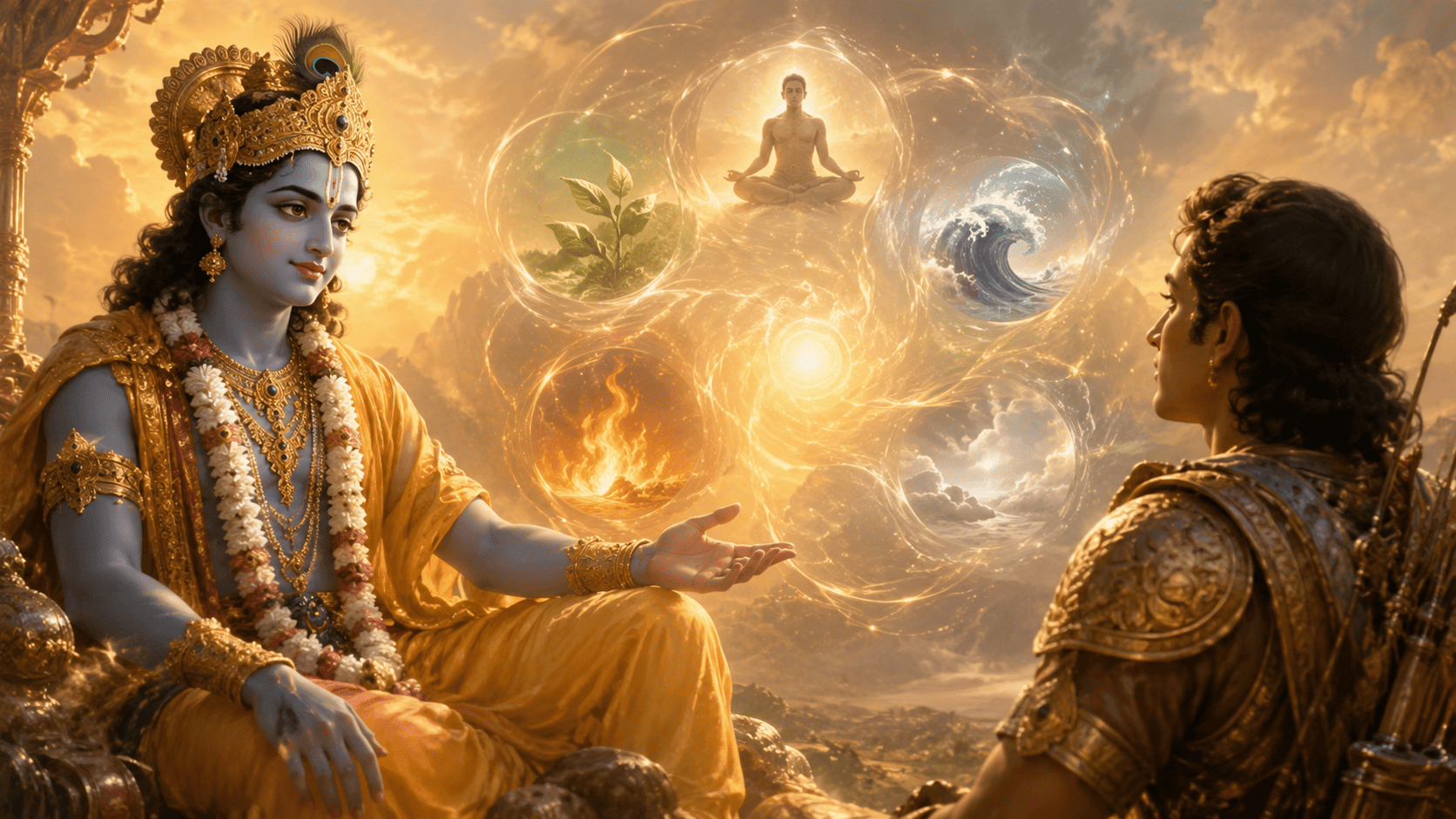
In this verse, Lord Krishna explains the perspective of a spiritually enlightened person. One who knows the truth understands the difference between the eternal soul and material nature.
Such a person realizes that the body, mind, senses, and intellect belong to Prakriti (material nature), while the soul is eternal, pure, and beyond all material activities.
Because of this understanding, the wise never falsely identify themselves as the doer of actions.
The Gunas Act Upon the Gunas
Lord Krishna states that all actions take place through the interaction of the three gunas—Sattva (goodness), Rajas (passion), and Tamas (ignorance).
The senses, mind, and body are all products of these qualities, and they naturally function according to their own nature.
Understanding that “the gunas act upon the gunas,” the wise person does not become emotionally attached to actions or their results.
Freedom from Attachment
A person established in spiritual wisdom performs every duty sincerely but remains free from attachment.
They neither become proud when successful nor discouraged when facing failure.
Since they know that material nature performs all activities, they remain peaceful, balanced, and detached in every situation.
Karma Yoga in Practice
Karma Yoga does not teach abandoning work; it teaches abandoning attachment.
A true Karma Yogi performs every responsibility with dedication while offering the results to God.
Without ego, possessiveness, or expectation of reward, actions become pure and no longer create bondage.
Such selfless action purifies the heart and leads to spiritual progress.
The Importance of Self-Knowledge
Self-realization enables a person to distinguish between the eternal Self and the temporary body.
With this wisdom, one understands that the soul never acts—it merely witnesses.
The body and mind continue to perform actions according to the laws of nature, while the soul remains untouched by them.
This realization removes ego, attachment, and inner conflict, bringing lasting peace.
Key Points
- A wise person understands the difference between the soul and material nature.
- The three gunas perform all actions through the body and mind.
- “The gunas act upon the gunas” is the true vision of spiritual wisdom.
- The enlightened person performs duties without attachment.
- Karma Yoga teaches action with dedication but without ego or expectation.
- Self-knowledge leads to freedom from attachment and liberation.
Profound Spiritual Meaning
This verse reveals the vision of one who has realized the truth. Such a person understands that all material activities arise from the interaction of the three gunas of nature. The eternal soul remains separate, untouched, and ever the witness.
Because the enlightened person knows that the gunas alone function within the realm of material nature, they neither develop pride nor attachment toward actions or their outcomes.
Lord Krishna teaches Arjuna that true freedom is attained not by avoiding action, but by performing one’s duties with wisdom, detachment, and the understanding that one is simply an instrument of the Divine.
Word-by-Word Meaning
Tattva-vit – Knower of the Truth
Tu – But
Mahā-bāho – O mighty-armed (Arjuna)
Guṇa-karma-vibhāgayoḥ – Of the distinction between the gunas and the actions arising from them
Guṇāḥ – The three qualities of material nature
Guṇeṣhu – Among the objects and qualities of nature
Vartante – Act, function, engage
Iti – Thus
Matvā – Knowing, understanding
Na Sajjate – Does not become attached
Message of the Verse
Lord Krishna teaches that a person who truly understands the nature of the soul and material existence realizes that all actions are performed through the interaction of the three gunas of Prakriti. The soul itself remains the eternal witness and is never the real doer.
By understanding this truth, one performs every duty without ego, attachment, or pride. Such detached action is the essence of Karma Yoga and gradually leads the seeker toward inner peace, self-realization, and ultimately, liberation (Moksha).