

In Indian culture, every festival and vrat (fast) has a deep spiritual, social, and familial purpose. These rituals are not only religious practices but also reflections of values like devotion, discipline, and family harmony. Santan Saptami is one such vrat, especially observed by mothers for the long life, health, prosperity, and well-being of their children. It is considered a sacred observance to ensure a safe and happy future for one’s children.
What is Santan Saptami?
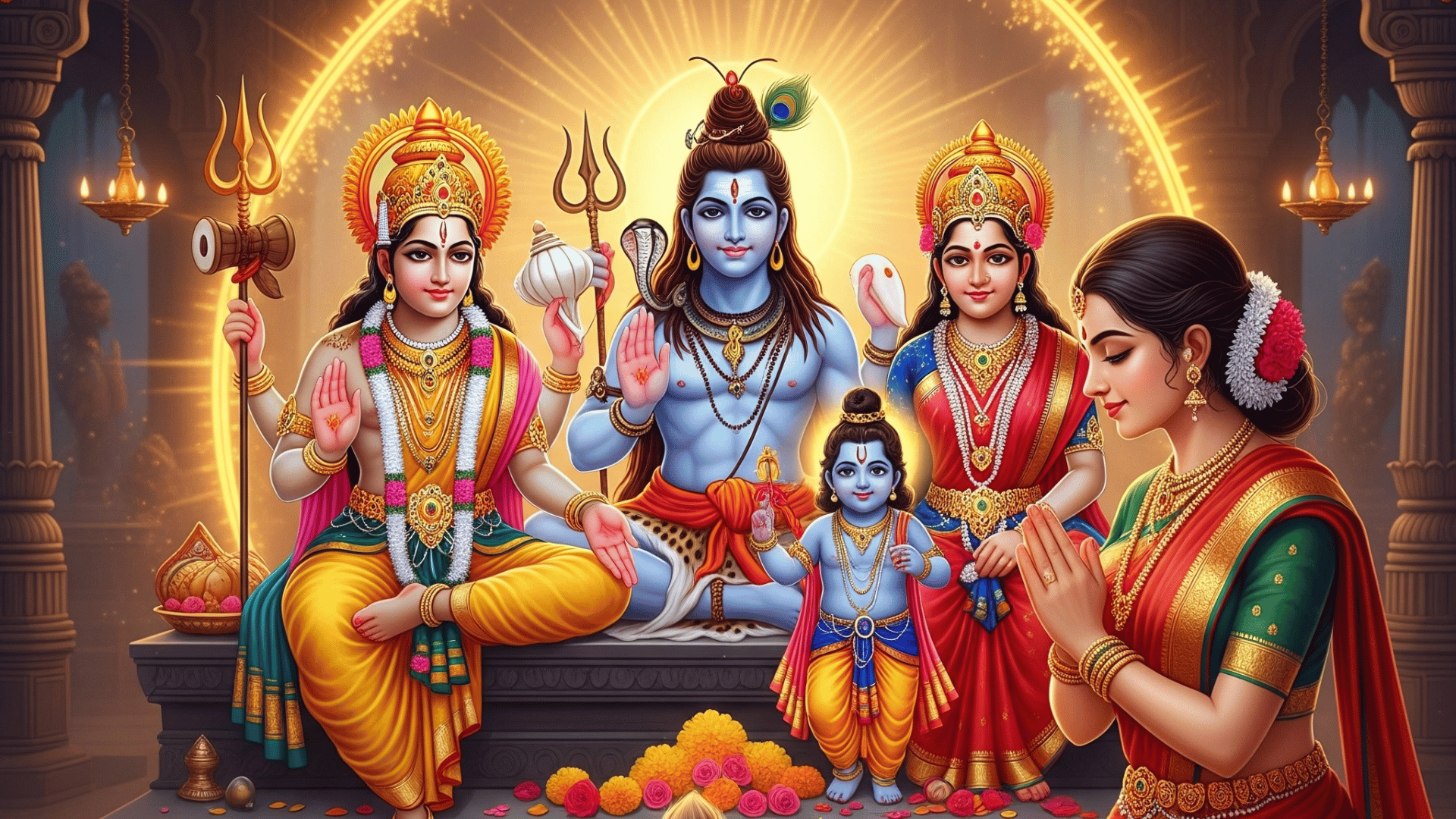
Santan Saptami is a Hindu religious vrat observed on the Shukla Paksha Saptami (seventh day of the waxing moon) of the Bhadrapada month. On this day, devotees—especially mothers—worship Lord Surya (Sun God), Lord Shiva, Goddess Parvati, and child Krishna (Santan Gopal), seeking blessings for their children’s protection, long life, and good fortune.
In different regions of India, it is known as Santan Saptami Vrat or Santan Saptami Puja. It is most popularly observed in Uttar Pradesh, Bihar, Madhya Pradesh, and Rajasthan, where women observe this vrat with deep faith and devotion.
Why is Santan Saptami Celebrated?
The main purpose of this vrat is the welfare and protection of children. In Indian tradition, children are seen as carriers of the family lineage and blessings of future generations. Every parent desires that their child grows up to be healthy, virtuous, and long-lived.
Beliefs about Santan Saptami Vrat
- Removes obstacles and dangers from children’s lives.
- Grants long life and protection from diseases.
- Brings safety to unborn children, making it especially beneficial for pregnant women.
- Blesses childless couples with the gift of progeny.
Santan Saptami Vrat Katha (Legends)
Story of Devaki and Lord Krishna
Once, Lord Krishna explained the importance of Santan Saptami to Yudhishthira, the eldest Pandava. He said:
“O Dharmaraj, by fasting on this day and worshipping Lord Surya and Lord Lakshmi-Narayan with devotion, one is blessed with the joy of children.”
Krishna further shared—When his mother Devaki was imprisoned by Kansa, every child she bore was killed at birth. At that time, Sage Lomash advised Devaki to observe Santan Saptami Vrat with full faith. By following the prescribed rituals, Devaki gained divine protection, and soon Krishna was born, who later freed the world from Kansa’s tyranny.
Story of King Nahush and Queen Chandramukhi
Another famous legend of this vrat is about King Nahush of Ayodhya and his wife Queen Chandramukhi.
The queen had a dear friend named Roopmati. One day, both went to bathe at the banks of the Sarayu River. There, they saw many women performing Santan Saptami Puja. Inspired, the queen and her friend also resolved to observe this vrat for child blessings. However, over time the queen forgot her promise.
Eventually, both friends died and after several cycles of rebirth, they regained human life. Queen Chandramukhi was reborn as Princess Ishwari, and Roopmati was born as the daughter of a Brahmin family.
Roopmati remembered her past life and faithfully performed the Santan Saptami vrat, which blessed her with eight children. Ishwari, however, neglected the vrat and remained childless.
Filled with jealousy, Ishwari tried to harm Roopmati’s children, but she failed each time. Realizing her mistake, she repented and sought forgiveness. Roopmati forgave her and advised her to perform the vrat sincerely. When Ishwari finally observed the vrat, she too was blessed with children.
Importance of Santan Saptami
This vrat is considered powerful for:
- Child Blessings: Grants children to couples who are childless.
- Child Protection: Protects children from diseases, misfortunes, and dangers.
- For Pregnant Women: Safeguards the unborn child and ensures safe delivery.
- Family Prosperity: Brings peace, happiness, and prosperity to the household.
- Spiritual Values: Reminds parents of their sacred duty towards nurturing and protecting their children.
Santan Saptami Vrat Vidhi (Method of Observance)
Preparations (Day before the vrat)
- Take only satvik food (pure vegetarian meal).
- Maintain self-control and purity.
On the Day of Vrat
- Morning Rituals – Take an early bath before sunrise, wear clean clothes.
- Sankalp (Resolution) – Resolve to observe the vrat for children’s well-being.
- Worship Materials – Kalash, diyas, flowers, fruits, roli, sacred thread, milk, curd, honey, tulsi leaves, and Ganga water.
- Puja Process –
- Install a Kalash and light a diya.
- Offer water (Arghya) to Lord Surya.
- Worship Lord Shiva, Goddess Parvati, and Santan Gopal.
- Pray for children’s health, protection, and happiness.
- Vrat Katha – Listen to or recite the story of Santan Saptami.
- Fasting – Stay without food or take only fruits (phalhar). Break the fast in the evening after prayers.
Special Rules
- Donate seven types of grains or seven items.
- Light seven lamps in the home for auspiciousness.
- Bless children for long life and good health.
Religious & Social Dimensions
Santan Saptami is not just about personal devotion but also conveys a social message—that children are not only the joy of parents but also the future of society and the nation. Thus, their care, education, and nurturing are the greatest duty of parents.
Santan Saptami is more than a ritual—it is a divine commitment to children’s safety, happiness, and prosperous future. By observing this vrat with faith:
- All obstacles in children’s lives are removed.
- Childless couples are blessed with progeny.
- Families gain health, prosperity, and peace.