
Chapter 1 – Arjuna’s Despondency
Verse 4
Atr, shooraH, maheshvasaH, BheemarjunsamaaH, yudhi,
YuyudhaanH, viraatH, ch, DrupadH, ch, maharathH ||4||
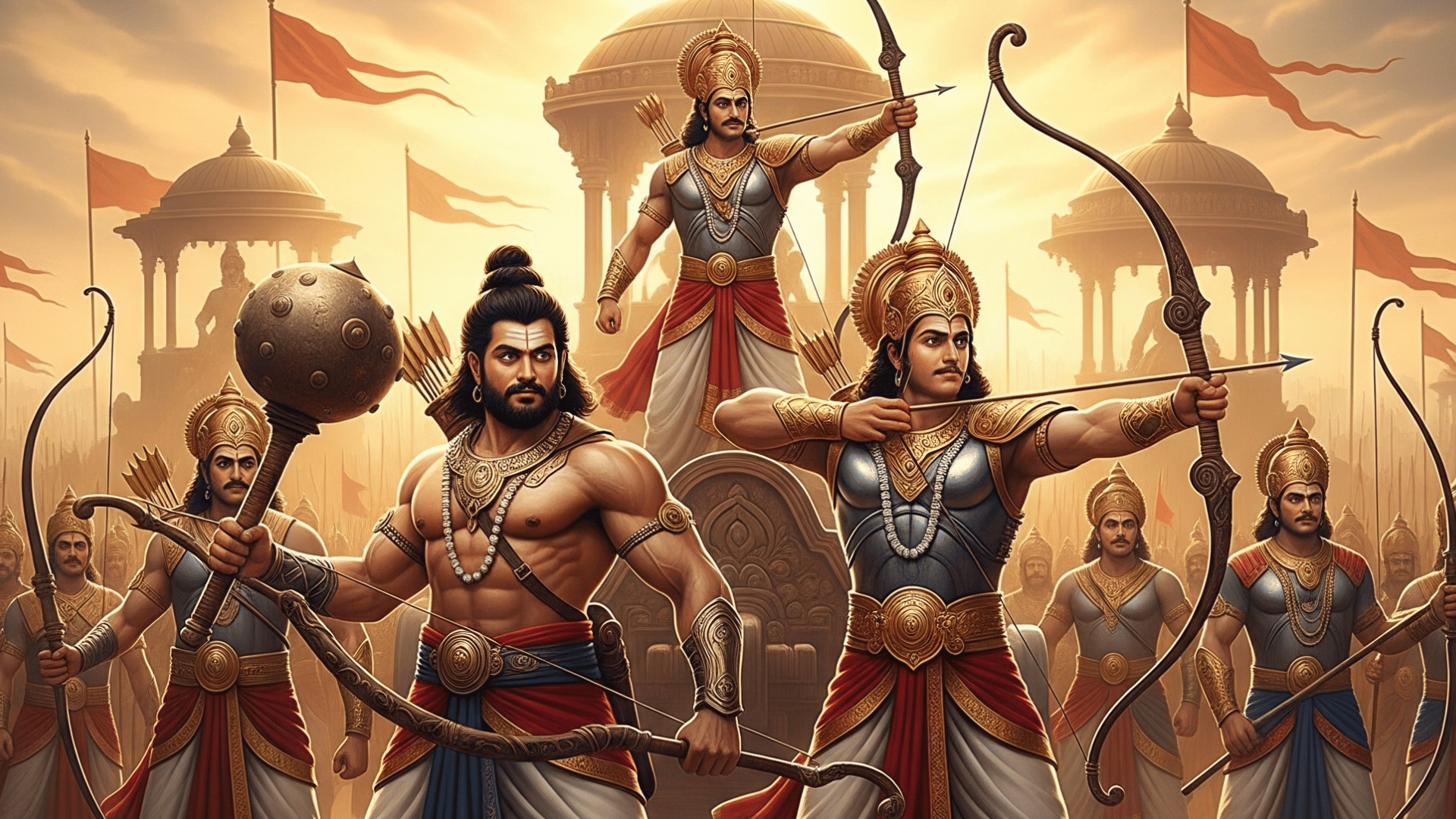
“Here in this (Pandava) army, there are great warriors, skilled in battle and equal to Bhima and Arjuna — mighty bowmen like Yuyudhana, Virata, and the maharathi Drupada.”
Deeper Meaning:
In this verse, Duryodhana is elaborating on the strength and valor of the Pandava army. He is informing his teacher Dronacharya that:
- “There are fierce warriors here like Bhima and Arjuna.”
- “There are also other great fighters equal in prowess — like Yuyudhana (Satyaki), Virata, and Drupada.”
Underlying Psychology:
On the surface, Duryodhana appears calm and informative,
but internally, he is anxious and disturbed.
- “Mahā-īṣvāsā” – means extremely skilled and powerful archers.
By using this word, Duryodhana acknowledges the strength of the Pandava army. - “Bhīmārjuna-samā yudhi” – calling these warriors equal to Bhima and Arjuna reveals his inner unease and growing alertness.
He realizes it’s not just about numbers; it’s about skill, character, and strategy.
Who Are These Brave Warriors?
- Yuyudhana (Satyaki): A mighty warrior from the Yadava clan and a close follower of Krishna. He was an expert in archery and always stood for righteousness.
- Virata: The King of Matsya, under whose shelter the Pandavas spent their year in exile. A courageous and experienced ruler.
- Drupada: Former friend-turned-rival of Dronacharya and father of Draupadi. A formidable warrior and a powerful king.
Deeper Message:
Duryodhana is beginning to understand that this war is not merely about numbers or weapons, but also about skill and moral strength — and in that domain, the Pandavas might have an upper hand.
While warning Dronacharya, Duryodhana is also trying to reassure himself, as if listing the warriors helps him mentally prepare:
“I must fight them. I must be ready.”
What This Shloka Teaches Us:
- Recognizing the opponent’s strength is not weakness — it’s the first step of strategy.
- The person who boasts only of his own power is often close to defeat.
- The true warrior is the one who honestly studies the strength of his enemy and prepares wisely.
- Those who stand for dharma (righteousness) are always granted capable allies and divine strength by the Supreme.