

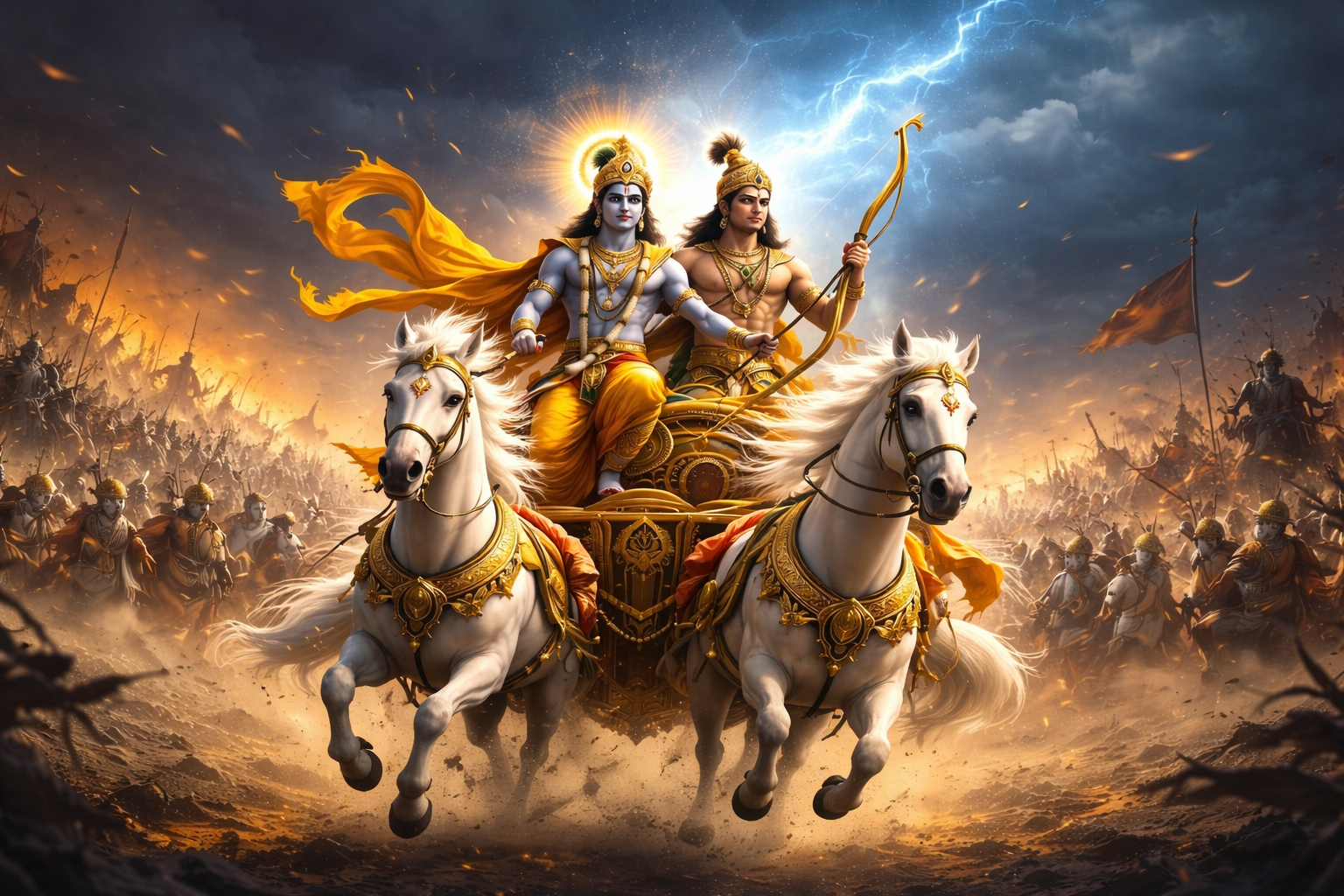
Chapter 2 – Sankhya Yoga
Verse 13
dehino ’smin yathā dehe kaumāraṁ yauvanaṁ jarā
tathā dehāntara-prāptir dhīras tatra na muhyati
Simple English Meaning:
Just as the soul in this body passes through childhood, youth, and old age, in the same way it attains another body after death. A wise and steady person is not confused by this change.
Detailed Explanation:
In this shloka, Lord Krishna explains the eternal nature of the soul and the temporary nature of the body using a very simple and practical example. He tells Arjuna that throughout life, the same person experiences childhood, youth, and old age, even though the body keeps changing.
Similarly, at the time of death, the soul leaves the old body and enters a new one. This transformation is natural and unavoidable. The body perishes, but the soul remains eternal.
Lord Krishna gives this knowledge to remove Arjuna’s grief, which arises from attachment to the physical body. When one understands that the soul never dies, sorrow and fear automatically dissolve.
Word-by-Word Meaning:
Dehinaḥ – of the soul
Asmin dehe – in this body
Kaumāram – childhood
Yauvanam – youth
Jarā – old age
Tathā – similarly
Dehāntara-prāptiḥ – attainment of another body
Dhīraḥ – wise, composed person
Tatra na muhyati – is not deluded by it
Deeper Spiritual Meaning:
This shloka reveals the profound truth that we are not the body, but the eternal soul. The body is constantly changing, while the soul remains unchanged. Death is not the end, but merely a transition from one body to another.
A person who understands this truth develops inner stability and fearlessness. Such wisdom frees one from grief, attachment, and anxiety. Lord Krishna teaches that true knowledge brings peace, clarity, and liberation from sorrow.