
Chapter 2 – Sankhya Yoga
Verse 22
vāsānsi jīrṇāni yathā vihāya
navāni gṛihṇāti naro ’parāṇi
tathā śharīrāṇi vihāya jīrṇānya
nyāni sanyāti navāni dehī
Simple Meaning
O Arjuna,
Just as a person gives up old and worn-out clothes and puts on new ones, in the same way, the soul abandons an old body and accepts a new body.
The body changes and perishes, but the soul never dies.
What we call death is only a change of body, not the end of the soul.
Detailed Explanation
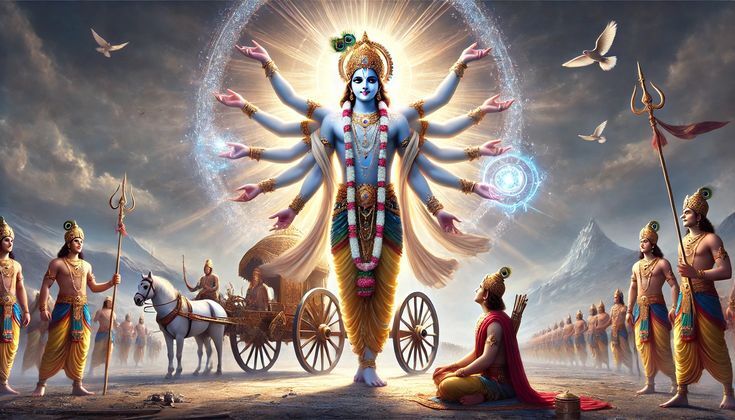
On the battlefield of Mahabharata, Arjuna is overwhelmed by fear, grief, and attachment.
He believes that war will destroy his loved ones and lead to irreversible loss.
Lord Krishna explains to Arjuna that death is not destruction but transformation.
In this verse, Krishna uses a very simple example — changing clothes — to explain the eternal nature of the soul.
Just as a human being discards old clothes and wears new ones without fear, the soul leaves an old, worn-out body and enters a new one.
Therefore, death should not be seen as an end, but as a natural transition in the soul’s journey.
Difference Between Body and Soul
The Body —
- Is born
- Grows
- Becomes weak or diseased
- Ages
- Eventually perishes
The Soul —
- Is never born
- Never dies
- Never ages
- Never changes
- Remains eternal
The body is only a garment of the soul, and death is simply the act of changing that garment.
Word-by-Word Meaning (Shabdarth)
- Vāsāṁsi – Clothes
- Jīrṇāni – Old and worn out
- Yathā – Just as
- Vihāya – Giving up
- Navāni – New
- Gṛhṇāti – Accepts
- Naraḥ – A human being
- Tathā – In the same way
- Śarīrāṇi – Bodies
- Vihāya jīrṇāni – Leaving old bodies
- Dehī – The embodied soul
- Anyāni saṁyāti – Attains other bodies
Deeper Spiritual Meaning
Through this verse, Lord Krishna removes the fear of death from the human mind.
Death is not something to be feared; it is part of the soul’s continuous journey.
Those who identify themselves only with the body suffer from fear and grief.
But those who realize their true nature as the soul understand that change is inevitable and natural.
True wisdom lies in knowing that the soul remains untouched by birth and death.
Truth About Death and Violence
This verse does not promote violence or reduce the value of life.
Instead, it removes ignorance-based fear related to death.
The soul cannot be killed, nor can it kill anyone.
Only the body undergoes change.
Special Message for Arjuna
Arjuna believed that war meant permanent destruction.
Krishna clarifies:
“Arjuna, only bodies perish — the soul continues its journey.”
Avoiding one’s duty due to emotional attachment is not wisdom but delusion.
Life-Changing Message of Shlok 22
- The soul is eternal
- The body is temporary
- Death is transformation, not destruction
- Fear and grief arise from ignorance
A person who understands this truth:
- Becomes fearless
- Rises above sorrow
- Performs duties with balance and clarity
Lesson for Modern Life
Modern humans suffer from stress, fear, and insecurity mainly because they identify only with the physical body.
When one understands:
“I am not the body; I am the soul,”
life’s challenges no longer break the person —
they strengthen and mature the individual.
Bhagavad Gita Shlok 2.22 teaches us that
death is not something to fear but something to understand.
Knowledge of the soul frees a person from fear and inspires righteous action without attachment.
Walking the path of duty with courage and understanding the eternal nature of the soul — this is true wisdom and the ultimate purpose of life.