
Chapter 2 – Sankhya Yoga
Verse 50
Sanskrit Verse
buddhi-yukto jahātīha ubhe sukṛita-duṣhkṛite
tasmād yogāya yujyasva yogaḥ karmasu kauśhalam
Simple Meaning
O Arjuna!
One who is established in wisdom (Buddhi Yoga) frees oneself from both good and bad results in this life. Therefore, engage in Yoga, for Yoga is the art of performing actions skillfully.
Detailed Explanation
Freedom from Good and Bad Results
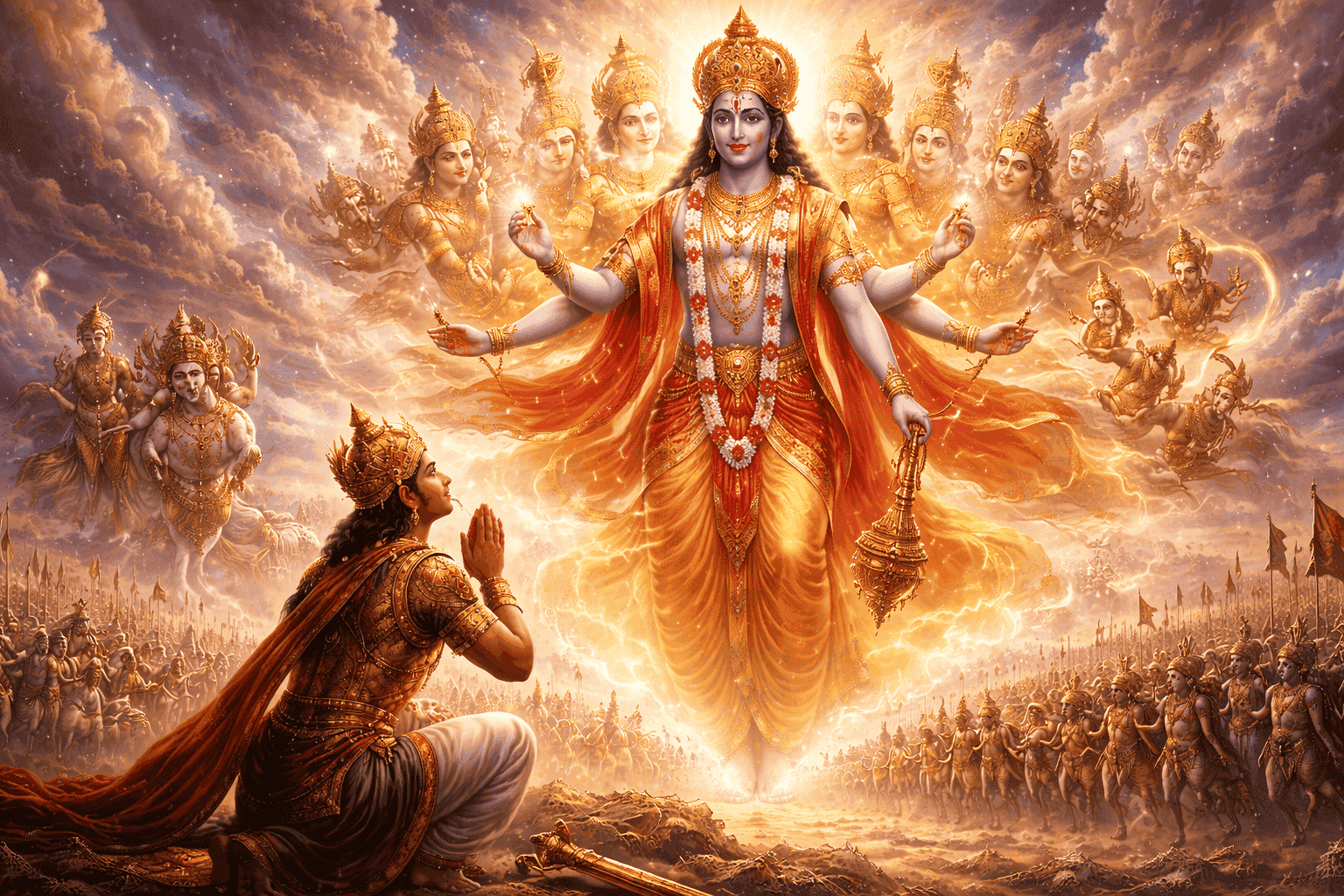
Krishna explains that a person who acts with a balanced and wise mind rises above both positive and negative outcomes. Normally, people get attached to good results and fear bad ones.
But one who practices Buddhi Yoga remains unaffected by both, and thus becomes free from karmic bondage.
Beyond Merit and Demerit
In ordinary life, actions lead to merit (good karma) or demerit (bad karma), which bind the soul.
However, a person established in wisdom transcends both. They perform actions without attachment, so neither success nor failure affects their inner peace.
Engage in Yoga
Krishna advises Arjuna to practice Yoga—not just as meditation, but as a way of living and acting.
This means performing every duty with awareness, balance, and detachment.
Such a person remains calm in all situations.
Yoga is Skill in Action
Krishna gives a powerful definition: “Yogaḥ karmasu kauśhalam”
This means Yoga is the art of performing actions with excellence and balance.
When actions are done without attachment, with full focus and clarity,
they naturally become more effective and meaningful.
Balanced Living and Inner Peace
Through this approach, a person avoids stress, fear, and confusion.
They act with clarity and remain peaceful regardless of outcomes.
This leads to both success in life and progress on the spiritual path.
The Assurance of the Path
Krishna’s guidance is practical and empowering:
Act with wisdom
Stay balanced in success and failure
Focus on the action, not the result
This removes anxiety and brings confidence in every step.
Key Points
- Wise action frees from both good and bad results
- Attachment to outcomes creates bondage
- Buddhi Yoga brings balance and clarity
- Yoga means skillful and mindful action
- Detachment leads to peace and freedom
Profound Spiritual Meaning
- This verse teaches that true mastery in life comes from inner balance, not external success.
- When a person acts without attachment, they are no longer affected by praise or criticism, gain or loss.
- Krishna shows that real freedom lies in transcending dualities and acting with pure awareness.
- The deeper truth is: True skill in action comes from a detached and balanced mind.
Word-by-Word Meaning
Buddhi-yuktaḥ – One who is united with wisdom
Jahāti – Gives up / transcends
Iha – In this life
Ubhe – Both
Sukṛita-duṣhkṛite – Good and bad results
Tasmāt – Therefore
Yogāya – To Yoga
Yujyasva – Engage yourself
Yogaḥ – Yoga
Karmasu – In actions
Kauśhalam – Skill / excellence
Message of the Shloka
A person who acts with wisdom and balance becomes free from both good and bad karmic results.
Krishna teaches that Yoga is the art of skillful action—performing duties with focus, detachment, and inner balance—leading to true peace and spiritual freedom.