
Chapter 1 – Arjuna’s Despondency
Verse 16
Anantvijayam’, raja, KuntiputrH, YudhishthirH,
NakulH, SahdevH, ch, sughoshmanipushpakau ||16||
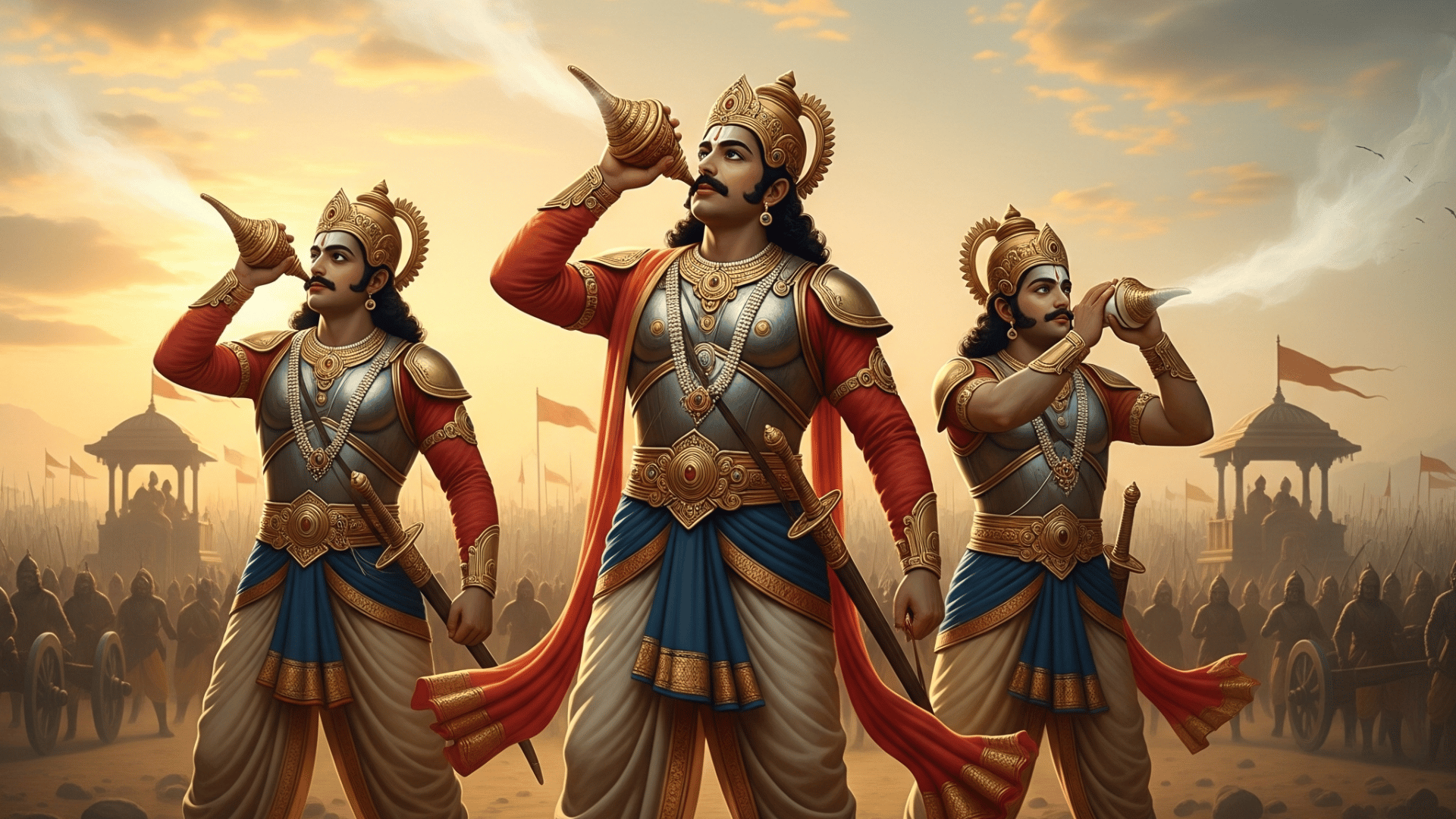
King Yudhishthira (the son of Kunti) blew his conch named Anantavijaya. Nakula and Sahadeva blew their conches named Sughosha and Manipushpaka, respectively.
Deeper Explanation / Detailed Interpretation:
In this verse, Sanjaya is narrating the battlefield scene to King Dhritarashtra. It describes the conch-blowing of other warriors from the Pandava side. Here, Yudhishthira—also known as Dharmaraj and the eldest of the Pandavas—blew his conch named Anantavijaya. The name symbolizes “Endless Victory” — a victory that aligns with dharma (righteousness) and never ceases.
Following this, the verse mentions his younger brothers Nakula and Sahadeva, who are considered the sons of the Ashwini Kumars. Both were mighty and brave warriors. They blew their respective conches named Sughosha and Manipushpaka.
- Sughosha refers to a clear, melodious sound that resonates far and wide.
- Manipushpaka symbolizes beauty and divinity — as if the conch is adorned with gems and flowers.
This verse highlights the organized preparation, military strength, and self-confidence of the Pandavas. Blowing of conch shells marks the formal declaration of war and also serves as a symbol of morale and valor. Its echo is meant to instill fear in the hearts of the enemy.
Summary:
Yudhishthira, Nakula, and Sahadeva—righteous and valiant warriors—blew their special conch shells to declare readiness for battle. The symbolic names of the conches reflect the Pandavas’ confidence, noble purpose (dharma), and their unshakable spirit of victory.