
Chapter 2 – Sankhya Yoga
Verse 15
yaṁ hi na vyathayantyete puruṣhaṁ puruṣharṣhabha
sama-duḥkha-sukhaṁ dhīraṁ so ’mṛitatvāya kalpate
Simple Meaning:
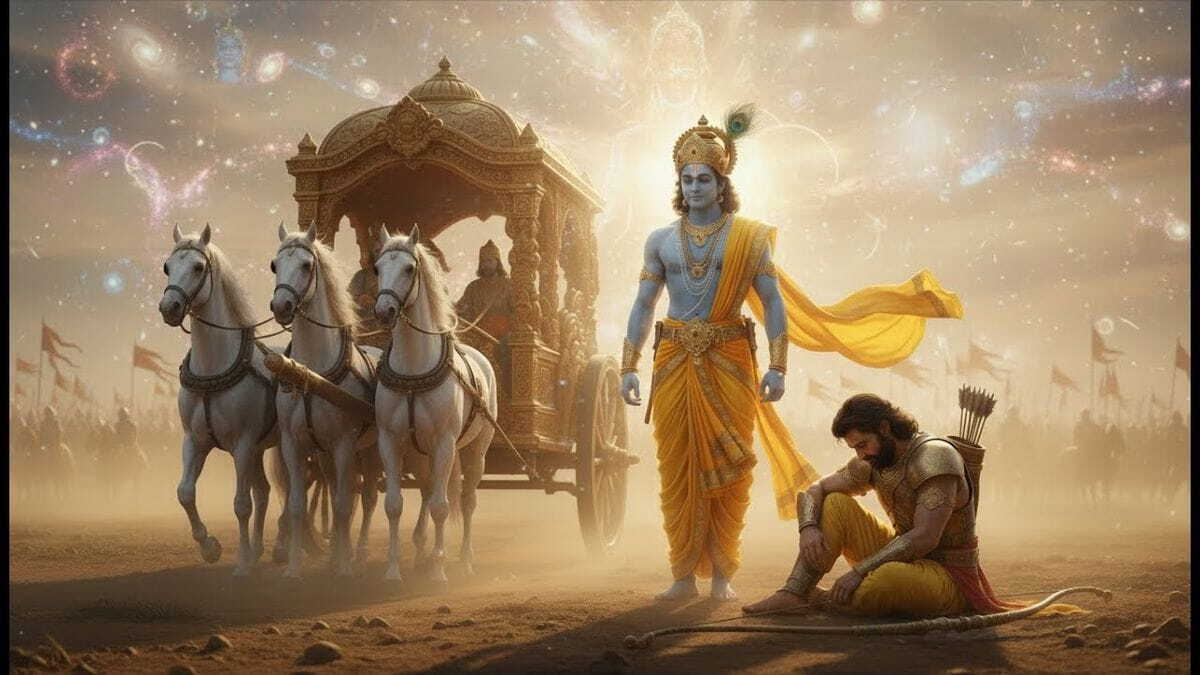
O Arjuna! The person who is not disturbed by happiness or sorrow, who neither becomes proud in favorable circumstances nor despondent in adverse ones, who maintains an equal mind in all situations, is considered steady, wise, and strong-minded. Such a person is not bound by external circumstances, nor does he succumb to them. He alone is eligible for immortality, that is, liberation (Moksha).
Detailed Explanation:
Lord Krishna explains that in life, happiness and sorrow are natural and inevitable experiences. They are an integral part of human existence. However, the person who allows these experiences to disturb his mental balance cannot progress spiritually.
Krishna emphasizes that the truly steady person (Dhira) is the one who does not become overly elated when experiencing pleasure, nor does he collapse under sorrow. He understands that both happiness and sorrow are temporary and fleeting.
A person who accepts every circumstance with equanimity rises above external events. His mind remains steady, his intellect remains clear, and his decision-making ability becomes strong.
A practitioner who understands and applies the meaning of Bhagavad Gita Chapter 2, Verse 15 in life gradually becomes free from fear, grief, anger, and attachment. He performs his duties without being bound by the results.
Thus, this verse guides a person towards mental resilience, self-discipline, and spiritual development.
Word-by-Word Meaning:
- Yaṃ – the person whom
- Hi – certainly
- Na vyathayanti – does not disturb or agitate
- Ete – these (happiness and sorrow)
- Purushaṃ – a person
- Purusharṣabha – the best among men, O Arjuna
- Samaduḥkhasukhaṃ – one who remains equal in pleasure and pain
- Dhīraṃ – steady, wise, composed
- Saḥ – he
- Amṛtatvāya – for immortality or liberation (Moksha)
- Kalpate – becomes eligible
Profound Spiritual Meaning:
This verse teaches a profound truth: we are not merely our body or mind; we are the soul. Happiness and sorrow are experienced at the level of the body, senses, and mind—they have no effect on the soul.
A person who deeply realizes this truth is not attached to pleasure, nor disturbed by sorrow. He maintains inner peace and equanimity in all situations.
Such a person remains steady amidst the ups and downs of the world. This steadiness leads him towards liberation, freeing him from the cycle of birth and death.
Lord Krishna imparts this teaching to Arjuna not merely to free him from fear in battle, but to release him from ignorance and attachment. The verse conveys that patience, equanimity, and self-knowledge are the true paths to immortality.
A true yogi is one who remains balanced through all joys and sorrows of life, and recognizes the soul’s permanence, attaining ultimate peace.