
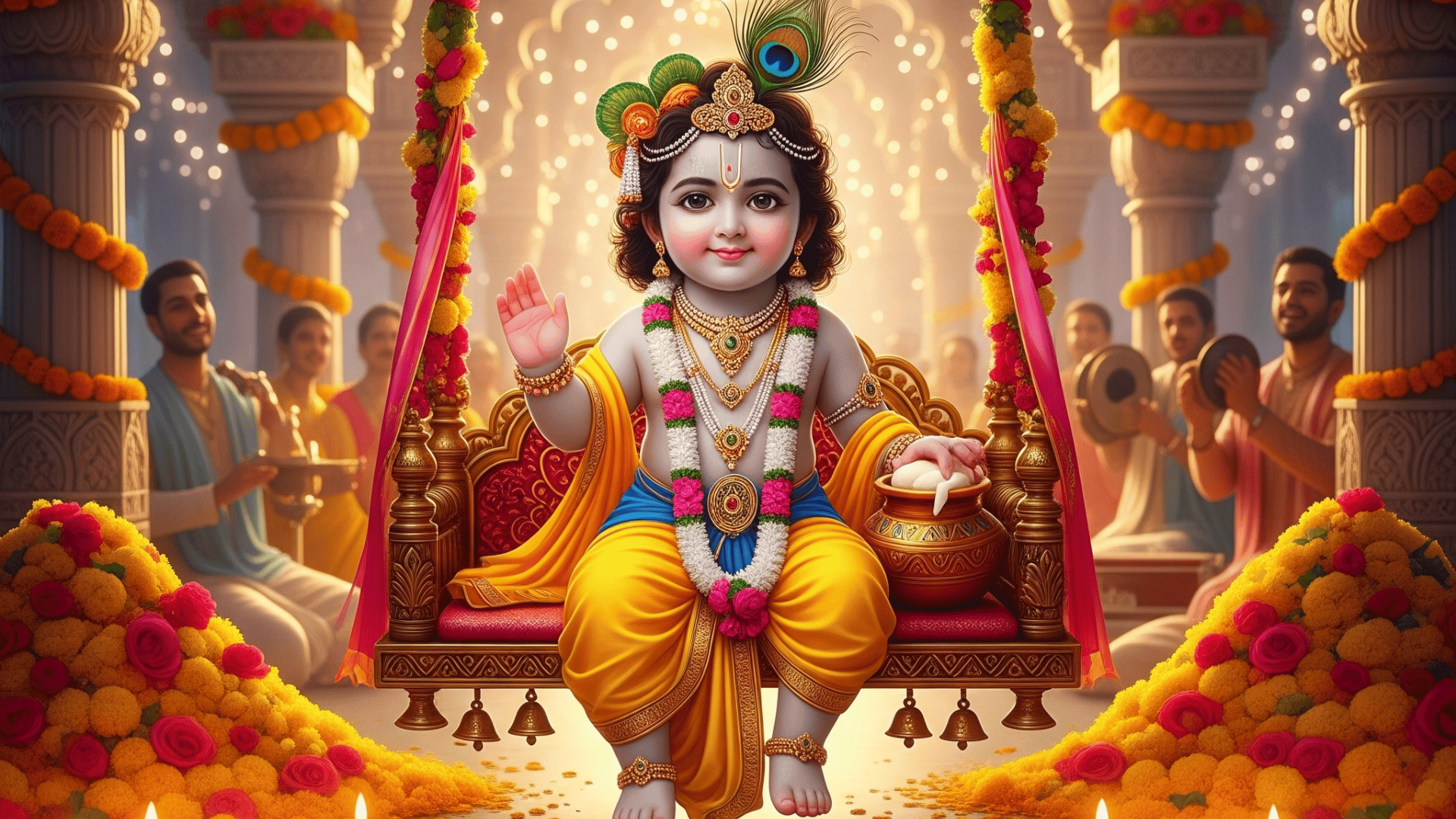
Shri Krishna Janmashtami is a major Hindu festival celebrated as the birth anniversary of Lord Krishna. It is observed on the Ashtami tithi of the month of Bhadrapada, at midnight, with great joy and devotion. On this day, temples are adorned with tableaux, Dahi Handi (pot-breaking) events, devotional singing, and fasting. Devotees worship Lord Krishna in his child form to seek blessings for happiness, prosperity, and the protection of righteousness.
Panchang-based Reason
Lord Krishna’s birth falls on the Ashtami Tithi of the Krishna Paksha (waning phase of the moon) in the month of Bhadrapada, which is based on the Indian Hindu lunar calendar.
In 2025, this Ashtami Tithi spans across two days—15th and 16th August. This means, according to the Panchang, Ashtami Tithi begins late at night on 15th August and continues until the evening of 16th August.
Difference According to Traditions
- Smarta Tradition – If Janmashtami’s tithi falls during the midnight (Nishita Kaal), they celebrate and perform the puja on the first day, i.e., 15th August.
- Vaishnava Tradition (including ISKCON) – They consider the exact combination of Ashtami Tithi and Rohini Nakshatra, so they usually celebrate Janmashtami on 16th August.
Thus, in 2025, Janmashtami will be observed on both dates, but the day may differ depending on the tradition followed.
Janmashtami 2025 – Date & Auspicious Timings
| Detail | Time / Date |
|---|---|
| Ashtami Tithi Begins | 15th August, ~11:49 PM |
| Ashtami Tithi Ends | 16th August, ~9:34 PM |
| Nishita Puja (Auspicious Time) | 16th August, ~12:04 AM to 12:47 AM |
| Parana (Breaking the Fast) | After Rohini Nakshatra ends and after sunrise – Morning of 17th August |
If you want to perform the puja in full accordance with tradition, the midnight Nishita Kaal on 16th August is considered the most auspicious.
Puja Vidhi (Step-by-Step Rituals)
1. Preparations
- Decorating the Home or Temple – Clean and adorn the idol of Bal Gopal (child form of Krishna), arrange a decorated swing (jhula), colorful garlands, lamps, etc.
- Preparing Offerings – Panchamrit, tulsi leaves, turmeric, kumkum, sweets, fruits, milk-curd, and ‘Chhappan Bhog’ (56 varieties of prasadam).
2. Fasting (Vrat)
- Types of Fasts – Fruit-only fast (phalahaari) or nirjala (waterless) fast. The fast is broken only after the Janmashtami tithi and Rohini Nakshatra end, the next morning.
3. Nishita Puja Rituals
(Between 12:04 AM – 12:47 AM)
- Abhishek (ceremonial bath) of Bal Gopal with Panchamrit.
- Offering various sweets, fruits, flowers, lamps, and incense.
- Recitation of the Bhagavad Gita, Vishnu Sahasranama, Krishna Ashtottara Shatanam, devotional songs, and aarti.
- Chanting Shri Krishna Stotra and Shri Krishna Chalisa.
4. Festivities & Cultural Programs
- Raas Leela & Krishna Leela stage performances.
- Dahi Handi – In Maharashtra and other regions, youths form human pyramids to break a hanging pot, recreating Krishna’s playful butter-stealing pastimes.
5. Breaking the Fast (Parana)
- Performed after sunrise and the end of Ashtami Tithi and Rohini Nakshatra, considered auspicious.
Spiritual & Cultural Significance
- Victory of Dharma – Krishna’s birth marks the triumph of righteousness over injustice and tyranny.
- Teachings of the Bhagavad Gita – His guidance to Arjuna continues to be a timeless life philosophy.
- Spiritual Purification – Observing the vrat, worship, and devotion cleanses the soul, frees one from sins, and brings blessings.
- Cultural Traditions – Raas Leela, Jhula Utsav, Dahi Handi, and Chhappan Bhog inspire joy, unity, and devotion among devotees.
In Summary: Key Points
- Auspicious Time – Nishita Puja on midnight of 16th August is considered the most sacred.
- Puja Steps – Preparation of idol, offerings, decoration, fasting, midnight rituals, and cultural celebrations.
- Breaking the Fast – Morning of 17th August after the tithi and nakshatra end.
- Significance – Upholding dharma, spreading Krishna’s message, attaining spiritual purification, and celebrating cultural heritage.
In short, Krishna Janmashtami 2025 appears to fall on both 15th and 16th August because, according to the Hindu Panchang, Ashtami Tithi starts at midnight and lasts until the next evening; the difference in Smarta and Vaishnava traditions results in the date variation. Ultimately, the midnight Nishita Kaal remains the central and most auspicious moment for worship.
Celebrate this divine festival with devotion, discipline, and love, and may Lord Krishna bless your life with peace, joy, and prosperity.
“Jai Shri Krishna!”